உயர்நிலை வன உயிரினப் பாதுகாப்பு நிறுவனம்
(ஆராய்ச்சி, பயிற்சி மற்றும் கல்வி)Advanced Institute for Wildlife Conservation
(Research, Training and Education)(A Govt. of Tamil Nadu institute)

World Oceans Day was first conceptualized under the Earth Summit held in 1992 at Rio de Janeiro to raise concern and spread awareness about the importance of oceans and their services in human life along with sustainable management of resources. The theme of UN World Oceans Day 2020 is ‘Innovation for a Sustainable Ocean’ to instigate new methods, ideas, products and technology to fundamentally strengthen the sustainable management of world’s oceans with protective measures. The oceans provide substratum for biodiversity rich areas such as coral reef ecosystem, estuaries, mangroves, brackish water habitats, coastal wetlands and lagoons. Oceans prove to be a rapid reactive surface to climate crisis as they cover 71% of Earth’s surface and contain 97% of Earth’s water. Marine development is critical to conservation of the most productive ecosystems and sustainability of the coastal economy, hence, has to be carefully planned.
As per Centre for Coastal Zone Management and Coastal Shelter Belt-2017, India has a coastline of 7516.6 km, of which 1076 km is covered by Tamilnadu being the second largest coastline in India. There are 13 coastal districts in Tamilnadu where the local community majorly depends on ocean resources such as fishing, aquaculture, processing of fish and other derivatives, boating, tourism, etc., for their livelihood.
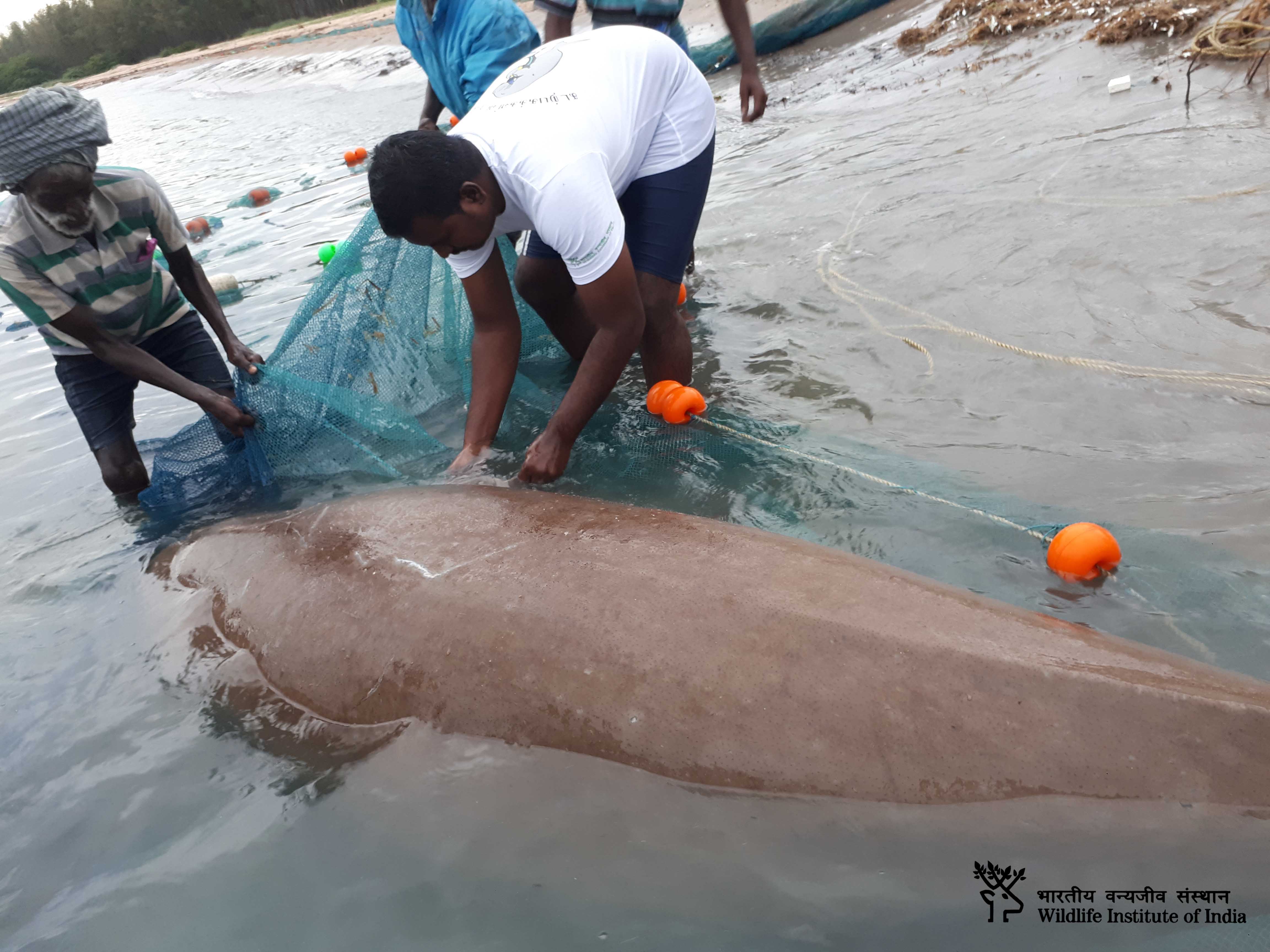
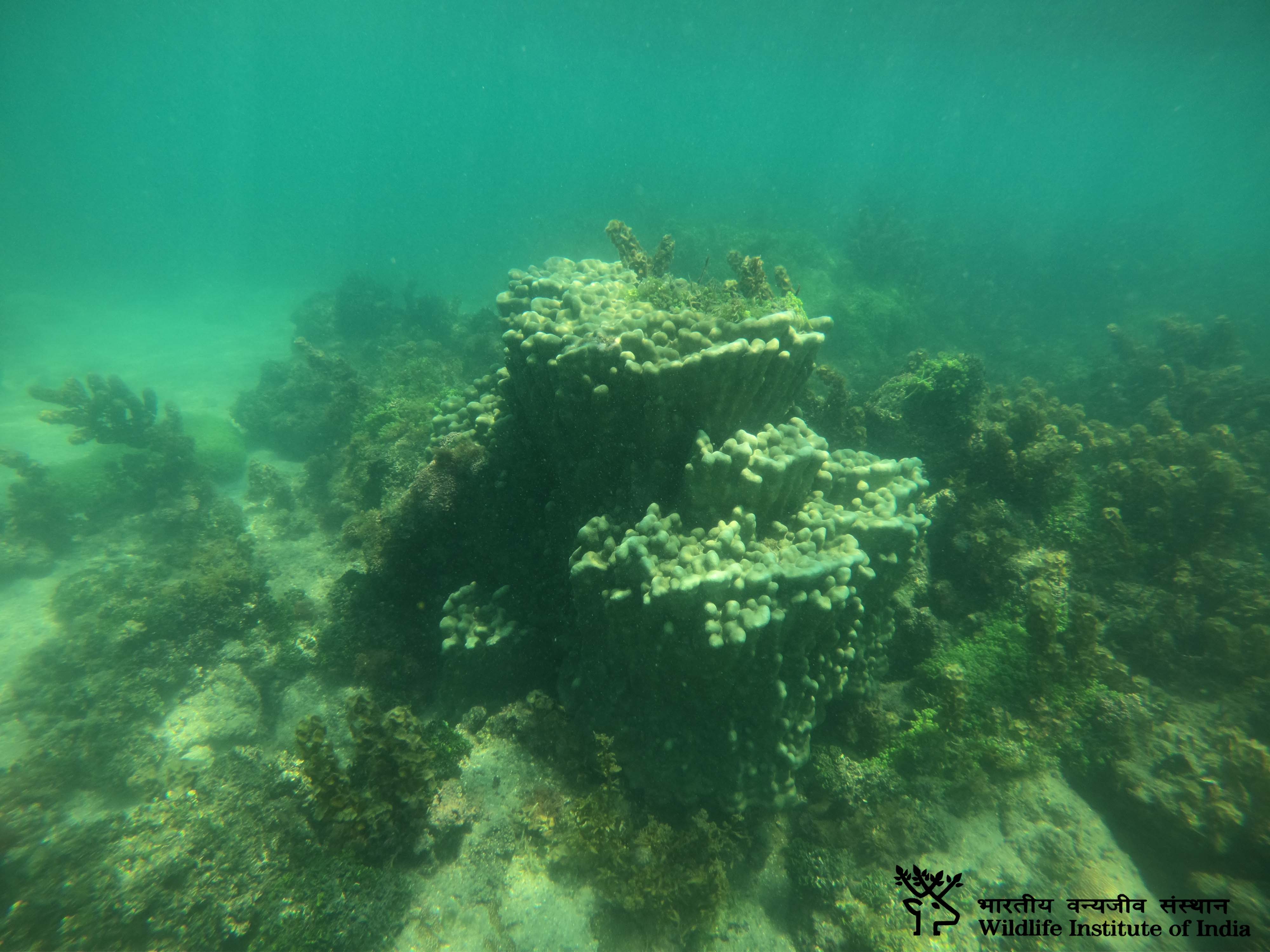
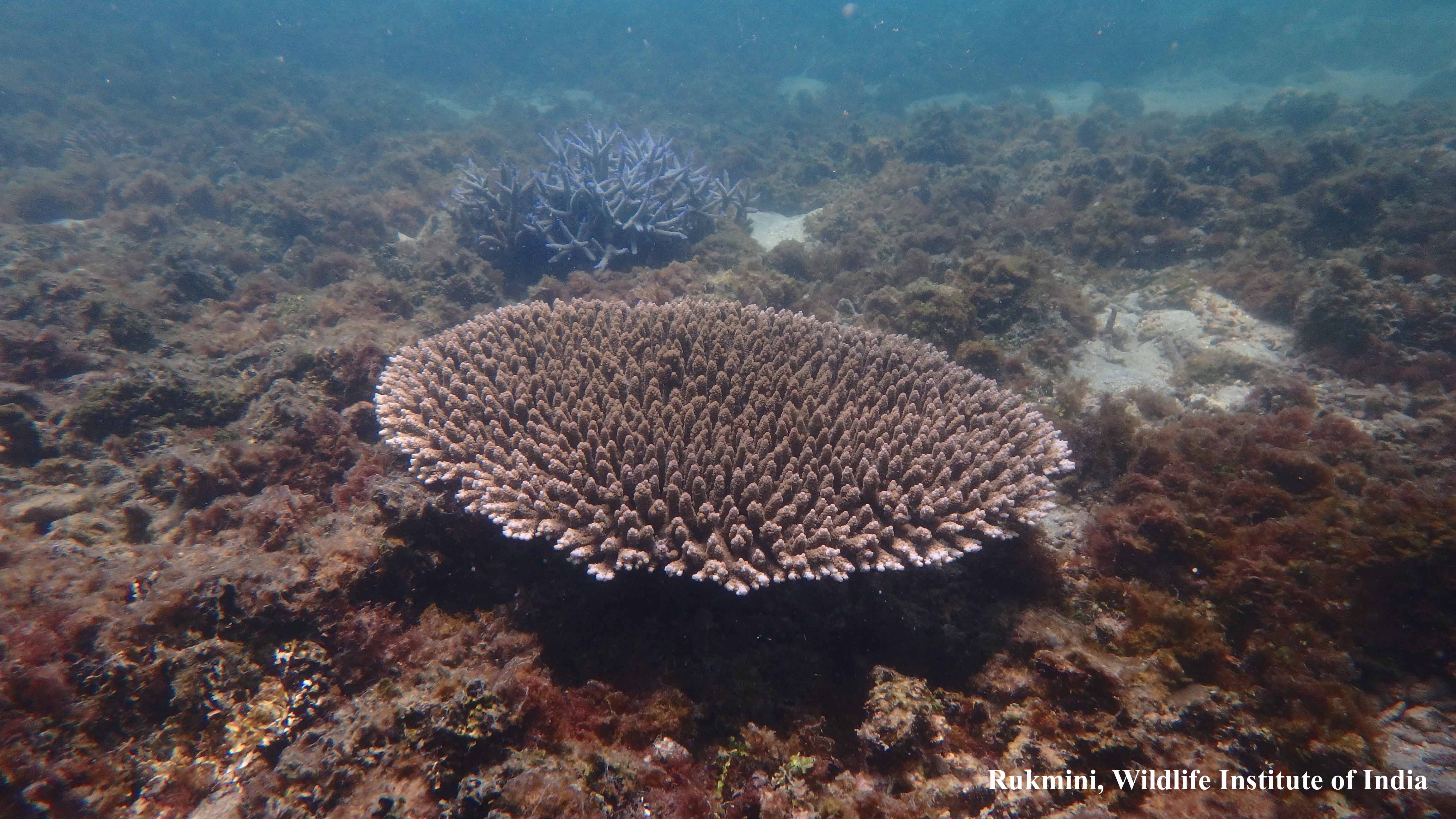
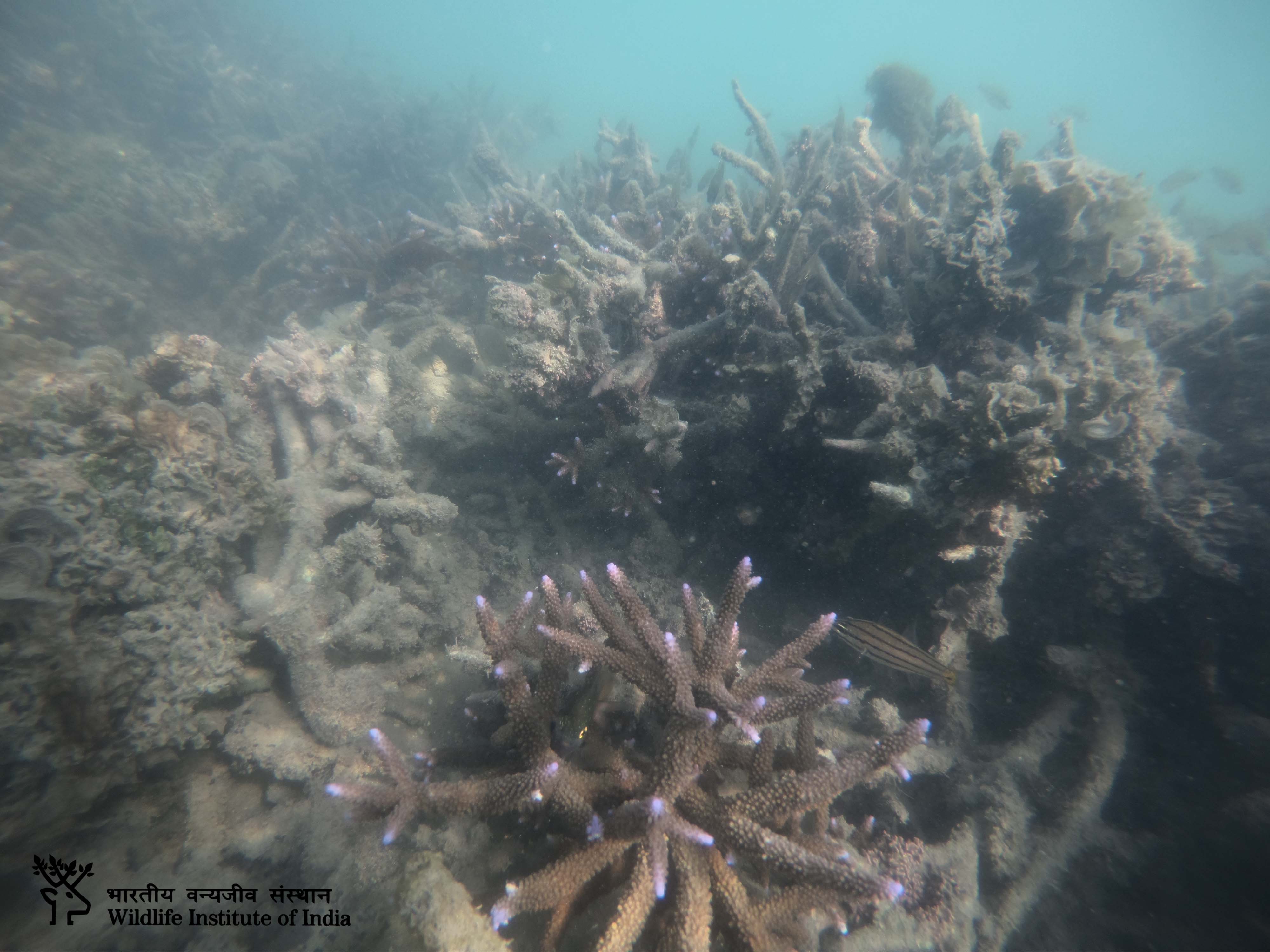
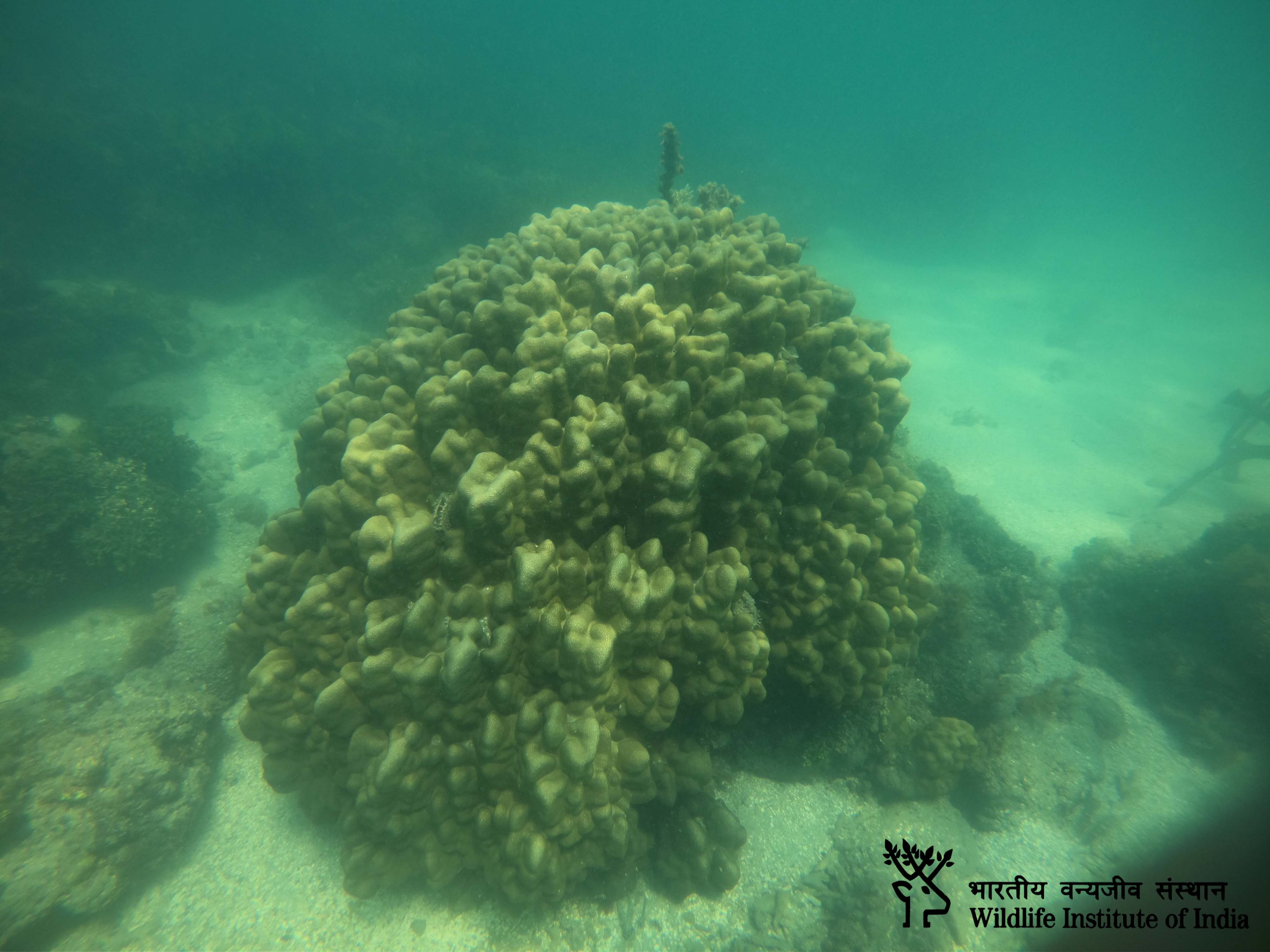
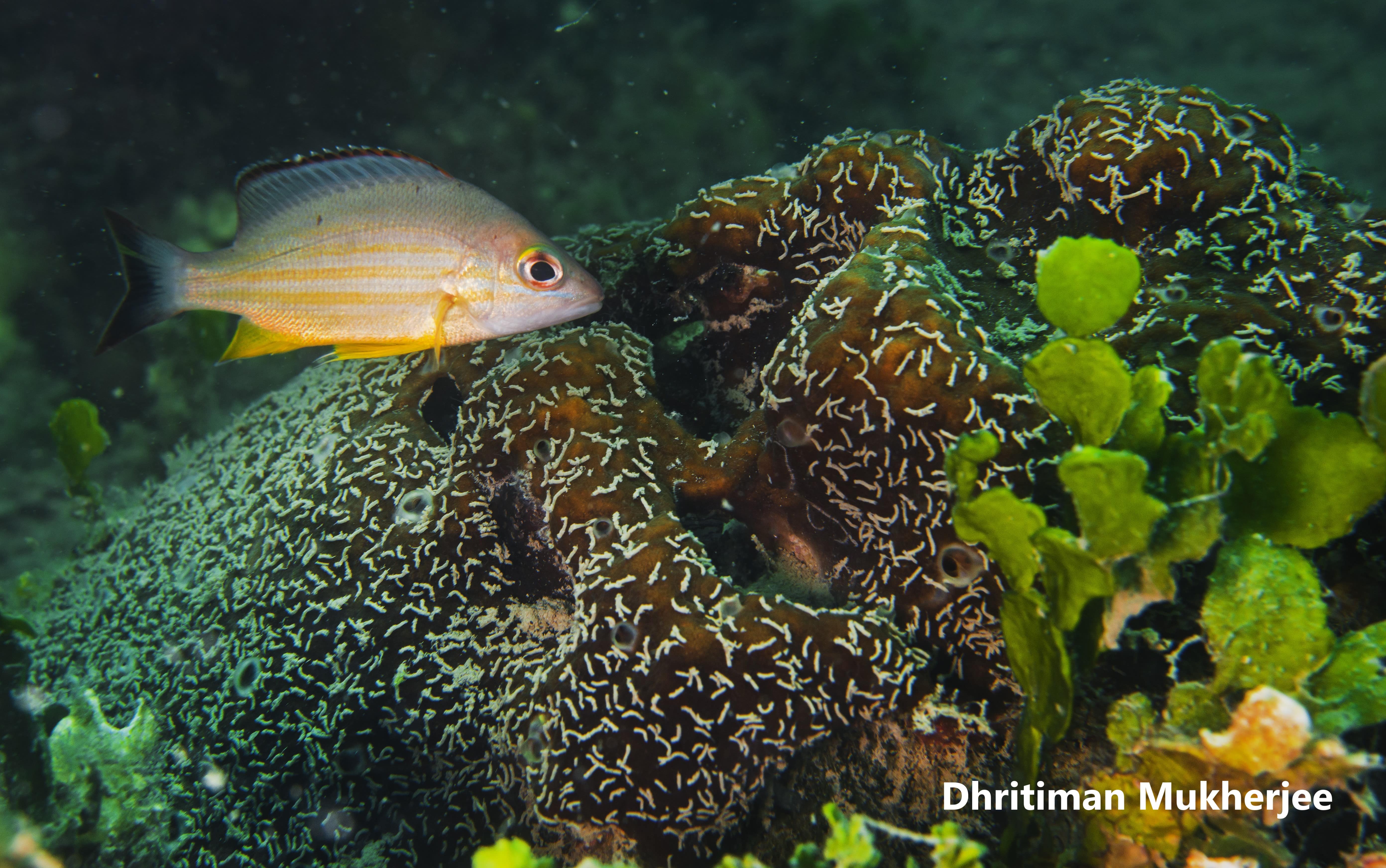
Tamilnadu set up the Gulf of Mannar Biosphere Reserve, first Marine Biosphere Reserve (GOMBR) in South and Southeast Asia, situated between longitudes 78°08 E to 79°30 E, and along latitudes from 8°35 N to 9°25 N, located near Mandapam in the areas of Thoothukudi and Ramanathapuram districts. The Gulf of Mannar national park situated within GOMBR, which is characteristically known for coral reefs, dugong, turtles, dolphins and balanoglossus. Different types of reef formation have been observed in Gulf of Mannar i.e. fringing reef, patchy reef and coral pinnacles. The major coral genera include Acropora, Pocillopora, Montipoora, Turbinaria, Echinopora, Favia, Favites, Goniastrea, Leptastrea, Leptoria, Platygyra, Goniopora, Porites, Merulina, Symphyllia, Galaxea, pavona, Coscinaria, Psammacora etc. Coral reefs provide a barrier in protecting the shorelines from erosion and damage due to cyclone apart from building the symbiotic relationship with algal interaction esp. Zooxanthellae. Tamilnadu is estimated to represent 94.3 sq.km from total area of 2374.9 sq kms of coral reefs in India.
Sea grasses involved in cycling of nutrients provide food and shelter and act as nursery ground for many fishes of commercial importance while seaweeds prove one of the commercially important marine living renewable resources. The unique ecological importance of the sea grasses is the conservation of rare and endangered animals like marine turtles, dugongs and some echinoderms. Among 6 Indian genera of sea grasses, 11 species are recorded from Palk Bay of Tamilnadu, of which, Cymodocea serrulata, Halophila ovalis, Halodule pinifolia and Syringodium isoetifolium are predominantly distributed whereas Halodule wrightii occur only in Akkalmadam in Rameswaram. 13 species of seagrasses under the 6 Indian genera occur in the Gulf of Mannar region such as Enhalus acaroides, Halophila ovalis, Halophila ovata, Halophila beccari, Halophilastipulacea, Thalassia hemprichii, Cymodocea serrulata, Cymodocea rotundata, Halodule uninervis, and Syringodium isoetifolium.
The agar yielding seaweeds are being harvested since 1966 from Gulf of Mannar islands, along the coastline from Rameswaram to Tuticorin and Sethubavachatram area in Palk Bay. So far, there are 650 species of seaweeds in India with Tamilnadu representing 302 species. Few economically important species recorded in Gulf of Mannar include Gelidiella acerosa, Gracilaria edulis, G.follifera, Gracilaria sp., Hypnea sp. Acanthophora, Sargassum sp., Turbinaria sp., Cystoseira trinodis and Hormophysa triquetra, Ulva sp., Enteromorpha, Caulerpa, Codium, Hydroclathrus, Halimeda, Padina, Chondrococcus and Laurencia.
Mangrove forests are important to the coastal ecosystem as they are considered 20 times more productive than open ocean ecosystem (Ramesh et al 2008). Mangroves are highly rich in nutrients and favour the nourishment of adjoining coastal habitat (Sandilyan 2014). Apart from their productivity, mangrove forests act as a natural buffer zone between the ocean and land, and are important source of carbon sink in the tropical zones which is vital to extenuate the causes of climate change. Mangroves are therefore proposed as an essential component to reduce emission from anthropogenic causes (Tue 2014 et al). Tamilnadu is home to two major mangrove forests, the Pichavaram mangrove in Cuddalore district and Muthupet mangrove forest in Thiruvarur district.
Among the threats to the oceans include extensive damage to natural resources through oil refineries, maritime accidents leading to spillovers, water pollution by sewage discharge of industrial effluents, overfishing and unsustainable pisciculture to sustain hunger demands, illegal trade of prized species such as, protected elasmobranchs and sea molluscans, sea-cucumber and sea horses.
The shores of Tamilnadu are important breeding grounds for these enigmatic creatures. The southern Indian coasts are home to sea turtles and Tamilnadu has four species of green turtle (Chelonia mydas), hawksbill (Eretmochelys imbricate), - Olive Ridley (Lepidochelys olivacea), Loggerhead turtle (Caretta caretta). Ten coastal districts in Tamilnadu acts as favourable nesting ground for four turtle species (Sudhan et al 2018). The Tamilnadu forest department has made several initiatives to protect the nesting sites and release the hatchlings safe in to the sea to a scale of almost 100000 eggs per year. Sea cucumbers, a soft-bodied marine echinoderm, highly traded for their medicinal properties and as a delicacy in Southeast Asian countries, found along Tamilnadu coast including Holothuria fuscogilva, Holothuria scabra, Bohadschia marmorata, Stichopus horrens, Holothuria atra, H. leucospilota and Stichopus horrens are the most common species in international illegal commercial trade. According to CMFRI report nine species of sea cucumber with high commercial values in international market are from Gulf of Mannar (Asha et al 2015). India is among the major shark fishing countries in the world with shark export of about 9% and country’s shark fin export stands at 6% of global figures during 2000-2009. The current status of sharks and rays along the coasts of Tamilnadu remain precarious as Tamilnadu state is the highest exporter of rays.
There are many conventions with a strong legal framework to imply action plans for conservation such as the Bonn Convention (also known as Convention on Migratory Species) to conserve aquatic, avian and terrestrial migratory species, Ramsar Convention to protect wetlands esp. waterfowl habitat, Regional Seas Convention for the protection of marine environment for e.g., OSPAR Convention (1972-74), Helsinski Convention (1992), Barcelona Convention (1995), Bucharest Convention (1992). Tamilnadu marine regions get covered by the RMFO- IOTC. Tamilnadu state has also taken a recent innovative step for capacity development of oceanic biodiversity management through training and skill development by complete planning of an institutional approach under the forest department.
Various research institutions and universities in Tamilnadu in close cooperation with the forest department are currently looking at the following research and management priorities.
1. Development of silviculture technology for endemic and threatened mangrove species
So far, selected mangroves which are most adaptive have been chosen for mangrove plantation along the coastal areas. Due to selective and monoculture of mangroves diminishing the overall biodiversity of this habitat. Therefore, it is important to develop silviculture technology to propagate endemic and threatened mangrove species towards restoring more diverse mangrove areas.
2. Cultivation of benthic microbes to rejuvenate ocean floor
Benthic microbes play a vital role in maintenance of energy flow at the bottom of ocean and their diversity is pivotal in aquatic and amphibian spawning and indirect role in water quality. Pollutants, climate change and rise in ocean temperatures deplete and break the equilibrium. As benthic microbes are cultivable, advanced technique like pyrosequencing can be used to study microbial diversity in this zone, in-vitro culturing and cultivation in ocean floor can improve water quality.
3. Development of restoration technology for endangered habitats
There are technologies available to restore the endangered coastal and marine habitats such as sea grass beds, coral reefs, mud flats, sand dune etc. However, these technologies are need to be reviewed to suit the Indian coastal environmental conditions, considering the regional hydrological and coastal settings of marine ecosystem.
4. Impact of advances in fishing technology on biodiversity
Fishing is one of the oldest professions and the fishing technology had a long history of evolution. Newer technologies are always aimed at getting more catch with least regard to biodiversity conservation or sustenance. Therefore, it is important to develop techniques with these concerns, in the meantime also assessing the impact of presently used tools on overall marine biodiversity.
5. Development of technology to minimize the by-catch
Indian fisheries have been witnessing growing trend in by-catch which may not be desirable for wellbeing of entire marine ecosystem as well as fisheries. Therefore, it is important to develop suitable fishing technologies to minimize the by-catch.
6. Ecological modelling studies include,
a. Determining and predicting the effects on sea turtles and other marine mammals from boating activity
b. Redirecting the flow of an inadvertent discharge (such as a fuel spill) into the coastal environment
c. Modelling the transport of sediment in the coastal and marine environments
d. Estimating the impact of the loss of kelp habitats on higher trophic levels. These types of models are useful for determining effective management strategies.
7. Development of better technology to monitor the benthic and pelagic biodiversity
Cost effective technology is required to monitor the benthic and pelagic biodiversity of marine ecosystem including that of deep-water benthos to understand the cascading effect of climate change.
8. Development of technology for facilitating the in-situ conservation of threatened species by developing better captive breeding technologies for sea ranching of threatened species such as pipe fishes, holothurians, mollusca, corals, etc.
9. Development of advanced technology to assess the populations of marine living organisms such as mammals for their long-term conservation.
10. Technology to monitor the sea level changes, topography, and climate change.